Is it too late to fix this?
A missing tooth rarely stays a dental matter for long. People tell us they have been chewing on one side for three years, that they turn their head slightly in conversation, that they have been meaning to deal with it since a quote at home came back at a number that made them close the laptop.
Implants are also the treatment people are most anxious about, and the questions they feel silly asking are usually the right ones: will it hurt, will anyone be able to tell, is there enough bone left after all this time. We would much rather you ask us those than read around them. Every case that comes in is read by a person here, and the first thing we do is put your records in front of a dentist who will tell you plainly whether an implant suits you and whether this is one trip or two. What follows is that conversation, written out in full.
The basics
What this actually is
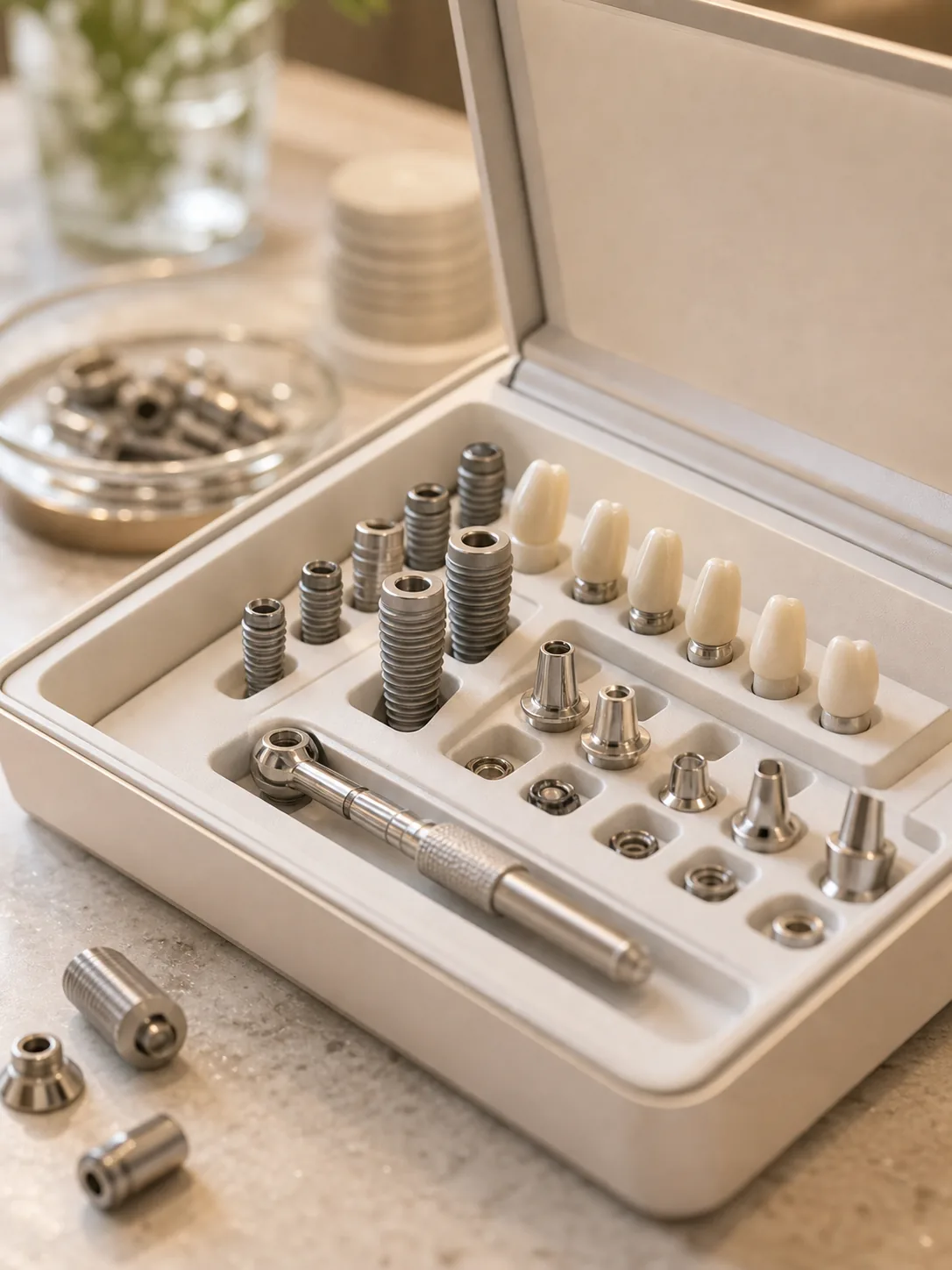
A dental implant replaces a single missing tooth, or several, from the root up. It has three parts: a small titanium (or ceramic) fixture that acts as an artificial root and is placed into the jawbone, an abutment that connects to it, and a crown on top that looks and works like a natural tooth. Because the fixture fuses with your own bone over time, the result feels stable and permanent rather than removable.
Implants solve the everyday problems that come with losing a tooth: difficulty chewing, gaps that affect your smile or speech, and neighboring teeth drifting into the empty space. Left unaddressed, a missing tooth can also lead the jawbone in that area to shrink over time; an implant helps preserve that bone by giving it a root to support.
For most healthy adults with one or more missing teeth, implants are considered the modern standard of care. Unlike a bridge, they don't require grinding down healthy neighboring teeth, and unlike a denture, they stay firmly in place. That's why so many patients, and dentists, favor them, though they aren't the only option, and the right choice always depends on your particular mouth.
Candidacy
Is this right for you?

Good candidates typically have enough healthy jawbone to hold the implant, healthy gums, and reasonably well-controlled general health. Non-smokers, or those willing to pause smoking around surgery, tend to heal more predictably. Age itself is rarely a barrier. What matters is bone quality and overall wellbeing rather than a number.
Some people need a preparatory step first. If bone has been lost, often after a tooth has been missing for a while, a bone graft or sinus lift may be recommended before or alongside placement. Uncontrolled diabetes, gum disease, certain medications, or heavy smoking can affect healing and may need to be managed first. If implants aren't the best fit, a bridge or a well-made denture can still restore function, and an honest dentist will tell you plainly which path suits you.
Why Korea
Why people fly to Seoul for implants

Korea places an enormous number of implants relative to its population, and a lot of that volume runs through Seoul. Fixtures are manufactured domestically, which is the main reason the price gap with the US and Europe is so wide: you are not paying to import the hardware. High volume also means CBCT scanning and digitally planned placement are routine here rather than a premium add-on, and surgeons see the difficult cases often enough to be unhurried about them.
The honest counterweight is biology, which does not care where you are. An implant needs three to six months to fuse with bone, and no market can compress that. What Seoul can genuinely offer is a well-planned placement at a reasonable cost, and clinics practised at splitting treatment across two trips for people who live somewhere else.
What to look for when you compare clinics
Ask whether the CBCT comes before the plan or after
A 3D scan should shape where the implant goes, not confirm a decision already made. If a clinic quotes a firm number before any imaging, they are pricing a guess.
Ask which fixture system they use, and whether it is serviceable at home
Years from now a dentist near you may need to work on it. A system your home dentist can identify and get parts for is worth more than a slightly cheaper one they have never seen.
Ask whether grafting is included or extra
Bone grafts and sinus lifts are common and can move a quote substantially. Find out whether yours is likely, and what it would add, before you book anything.
Ask them to commit to one trip or two
A clinic that promises a single visit for a case that plainly needs healing time is telling you what you want to hear. The right answer is sometimes inconvenient.
Before you go
Getting ready for the trip

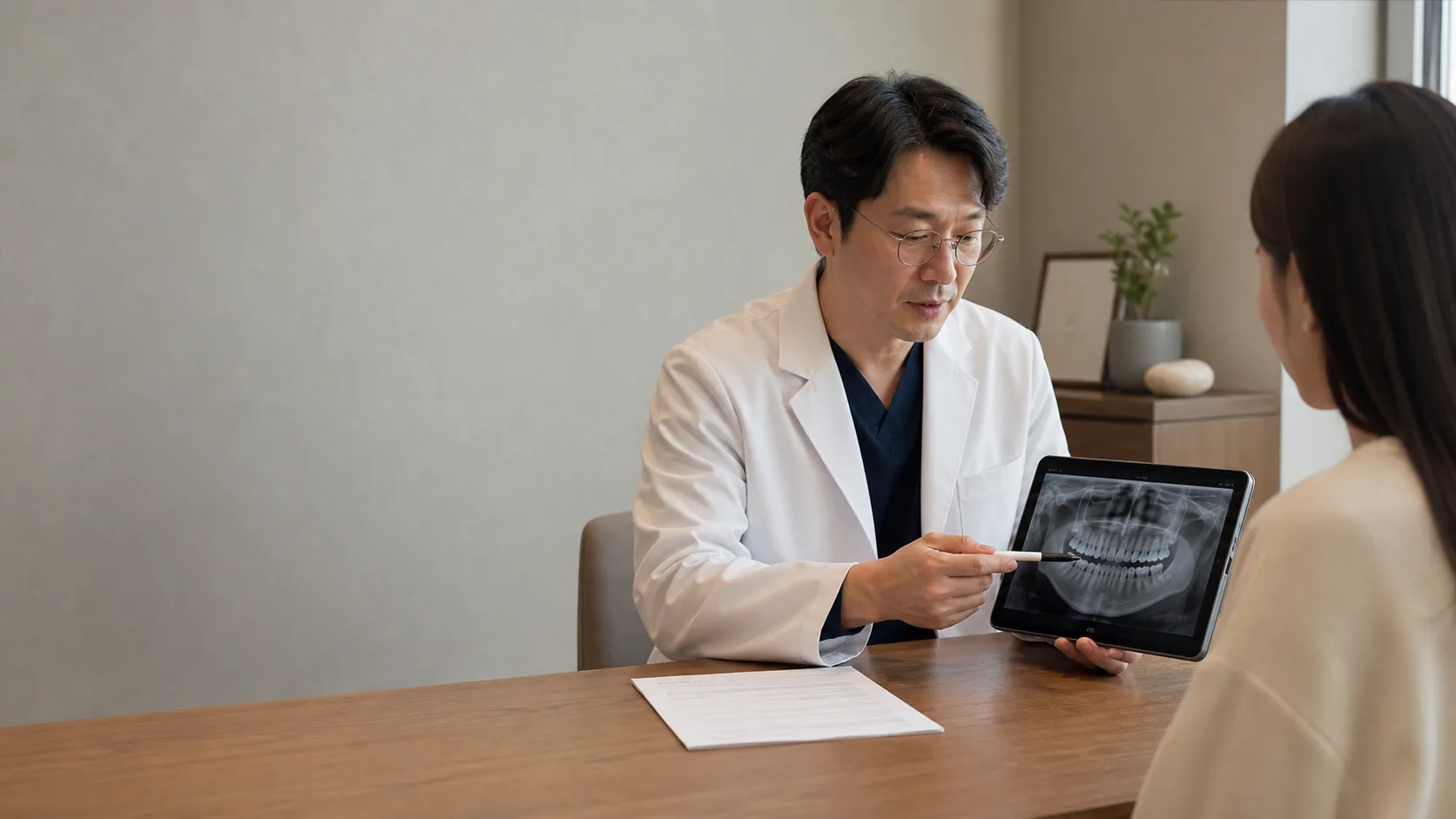
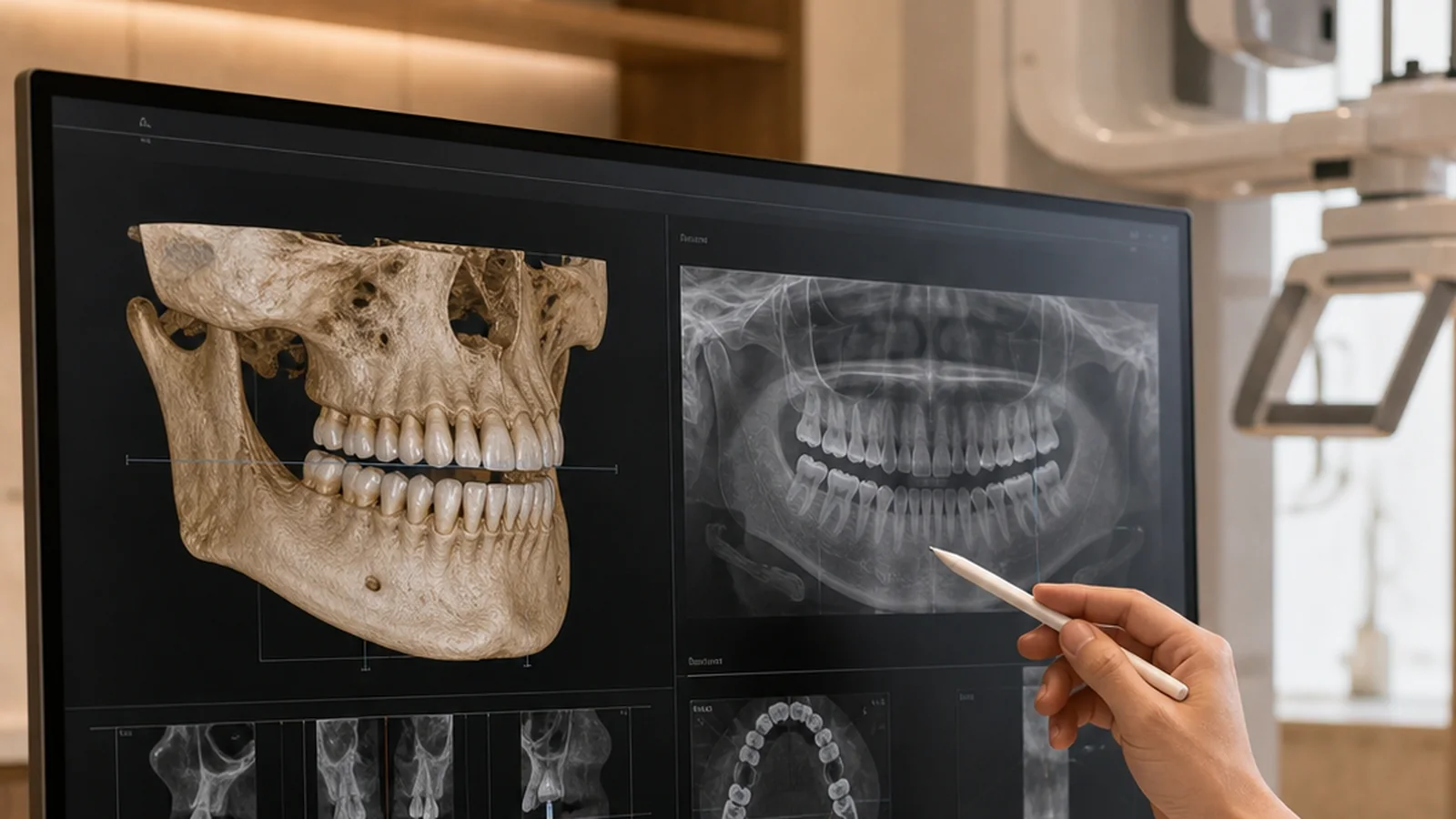
The most useful thing you can do before travelling is gather good records. A 3D CBCT scan of your jaw is the foundation of implant planning. It shows bone volume, nerve position, and sinus anatomy, so if you can share recent X-rays, a CBCT, or photos from your home dentist, a Korean clinic can review your case remotely and give you a realistic sense of what's involved before you book anything.
Prepare a short medical history too: any conditions, allergies, and a list of medications, particularly blood thinners or bone-related drugs, which your dentist needs to know about. Most importantly, plan your trip around healing rather than the surgery alone. Implants involve a fusion period of several months, so it helps to understand from the start whether your case is one trip or two before you book flights.
During
What actually happens
- 1
Remote case review
It starts before you fly. You share your records (X-rays, a CBCT if you have one, photos, and your history), and a dentist gives an initial read on whether you're a likely candidate, roughly how many implants are involved, and whether grafting may be needed. This is also when the one-trip versus two-trip question gets answered honestly, so you can plan travel with clear expectations.
- 2
In-person exam, 3D scan and planning
On arrival, you have a full clinical exam and a CBCT scan in the clinic. The dentist confirms bone volume, plans the exact implant position digitally, and reviews the plan and costs with you in person. Nothing surgical happens until you've seen and understood the plan. This visit is where the remote picture becomes a concrete, confirmed one.
- 3
Bone graft or sinus lift, if needed
If the scan shows you need more bone, a graft or sinus lift is done to build a stable foundation. Sometimes this can be performed at the same time as implant placement; other times it needs its own healing period of a few months first. If grafting is part of your plan, it's usually the main reason a case becomes a two-trip journey.
- 4
Implant placement surgery
Placing the implant fixture is a precise, routine procedure done under local anesthesia, often with sedation available if you're anxious. Most patients are surprised by how manageable it is. You feel pressure rather than pain, and the appointment for a single implant is typically fairly short. A temporary tooth or cover can often be fitted so you're not left with a visible gap.
- 5
Healing and osseointegration
This is the part that can't be rushed. Over roughly three to six months, the implant fuses with your jawbone in a process called osseointegration, which is what gives it long-term stability. Healthy people usually heal well during this window, and much of it happens quietly in the background. You can travel home and carry on with normal life while it does.
- 6
Abutment and final crown
Once the implant is fused, the abutment and a custom permanent crown are fitted, colour-matched to your other teeth. In a two-trip plan this is the second visit, often a shorter one. Some straightforward cases can be completed sooner or even in a single stay, but a durable, well-integrated result is always the priority over speed.
How do you know a clinic is any good?
Licence, sterilization, the lab, the follow-up plan. How to check each one from the other side of the world.
After
Afterwards, and how you'll feel

In the first days after placement, expect some swelling, mild bruising, and tenderness that settles with prescribed pain relief and cold compresses. Stick to soft, cooler foods, avoid the surgical site while chewing, and keep the area clean gently as directed. Most people feel noticeably better within a few days and can fly home once the dentist confirms you're stable to travel.
Healing then continues over the following months, mostly without you having to think about it. Keep up thorough brushing and flossing, avoid smoking, and attend any follow-up your clinic arranges. A good Korean clinic will offer remote check-ins, reviewing your photos and answering questions from home, and coordinate the final crown visit or, where appropriate, work with a dentist near you.
The outcome
What to expect, and how long it lasts
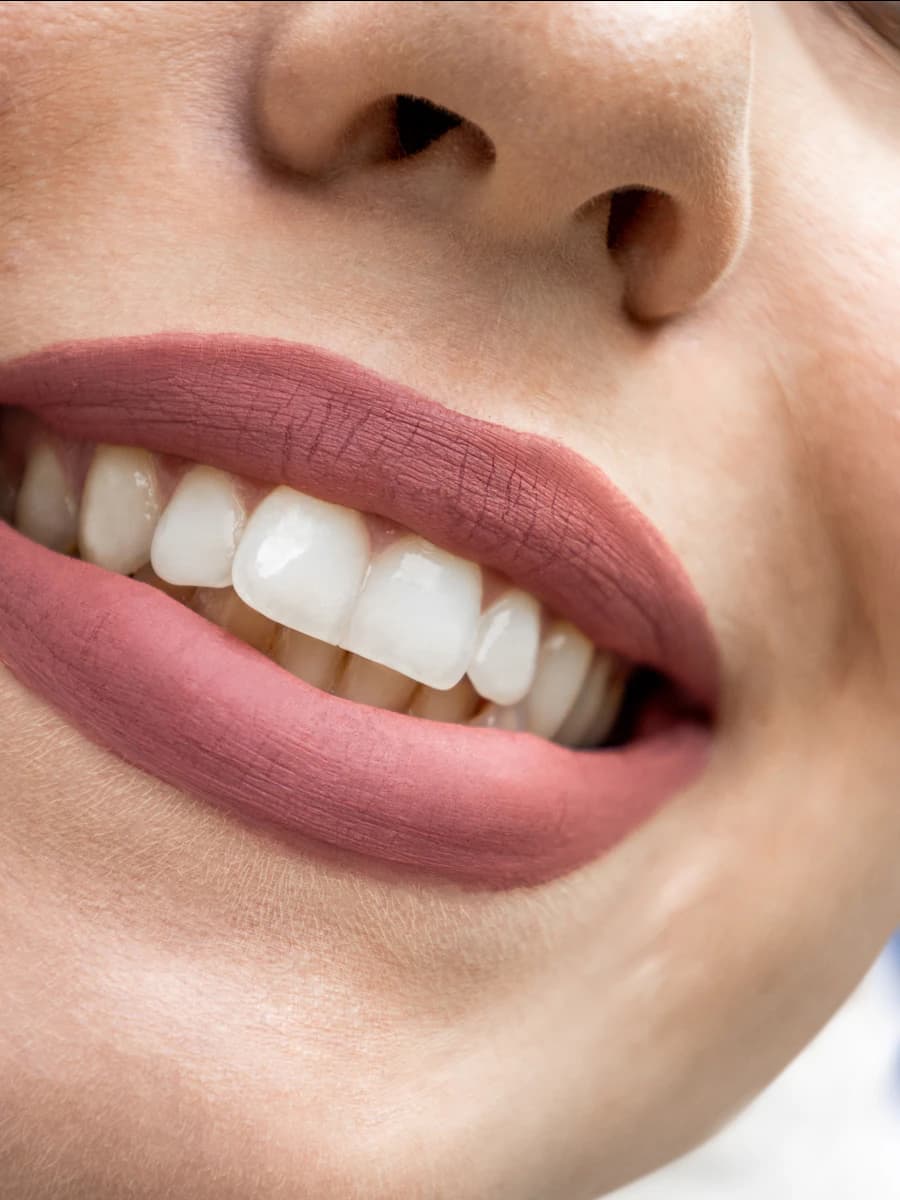
A well-placed implant looks and functions remarkably like a natural tooth. You can eat, smile, and speak without thinking about it, and it's fixed rather than removable. Because the crown is matched to your surrounding teeth, most people find the result blends in and quickly stops feeling like anything other than their own tooth.
Implants are a long-term investment. The titanium fixture itself can last decades, often a lifetime, when cared for well, while the crown on top may need replacing at some point due to normal wear. Maintenance is essentially good daily hygiene and regular dental check-ups; implants can't decay, but the gums and bone around them still need looking after to stay healthy.
What it costs
Implant costs: Korea vs. US (typical 2026 ranges)
| Treatment | Korea range | US range |
|---|---|---|
| Single implant (fixture + crown) | $1,000–2,500 | $3,500–6,500 |
| All-on-4 (per arch) | $8,000–15,000 | $24,000–35,000 |
| All-on-6 (per arch) | $9,500–18,000 | $28,000–40,000 |
Typical ranges from Seoul clinics and medical-travel guides for international patients, 2025–26, using Korean fixture systems. Bone grafting, a sinus lift, an imported fixture or a zirconia crown add cost. A dentist confirms your case from a CT scan.
Questions
Questions people actually ask
How much do dental implants cost in Korea compared to home?
Patients from the US, UK, Australia, and the Middle East often find implant treatment in Korea meaningfully more affordable than at home, even after travel. Exact costs depend on how many implants you need and whether grafting is involved, so it's best to get a personalised estimate from your records rather than rely on a single headline figure.
How many trips will I need, and how long does it take?
It depends on your case. Because the implant needs several months to fuse with the bone, many patients do two trips (placement on the first, the final crown on the second) with healing in between at home. Some straightforward cases can be completed in a single longer stay. Ask the clinic to confirm the likely number of trips before you book anything.
Does getting an implant hurt?
The surgery itself is done under local anesthesia, and sedation is usually available if you're nervous, so you shouldn't feel pain during placement, mostly pressure. Afterward there's typically some swelling and soreness for a few days, which prescribed pain relief manages well. Most patients describe it as far more comfortable than they expected.
How long do dental implants last?
With good care, the implant fixture can last many decades and often a lifetime, while the crown on top may need replacing over the years from normal wear. Long-term success comes down to healthy gums, good daily hygiene, and regular check-ups. Implants can't decay, but the surrounding tissue still needs care.
Are implants safe, and how successful are they?
Dental implants are a well-established, widely used treatment with a strong long-term track record when placed and maintained properly. Success is highest in healthy patients with good bone and hygiene; risks are generally low but real, which is why careful planning, an experienced dentist, and honest screening matter. Your dentist will discuss your individual outlook candidly.
What happens if I need a bone graft?
If your scan shows there isn't enough bone, a graft or sinus lift builds a stable base first. Sometimes it's done at the same time as placement; sometimes it needs its own healing period, which can turn a case into two trips. It's a common, routine step. Ask whether your scan suggests it is likely, so a second trip is not a surprise.